Patient Journey Snapshot
Case studies offering honest insight into treatment, quality of life and the real costs involved.
Meet Vera…
35
Age at diagnosis - terminal prognosis
3.5+
Years of stable disease on non-toxic regimen
5
Treatment modalities - personalised pipeline
~0
Serious side effects - 2 years on cancer vaccine
Living with metastatic breast cancer (ER+/HER2−)
1. THE DIAGNOSIS
In May 2022, Vera was told she had metastatic breast cancer spread to her bones. She was 35. The prognosis was poor. Within weeks she realised the Dutch system would not optimise care for her specific situation and so she sought expert navigation through our sister 1:1 consultancy, ACT Above & Beyond.
“My whole world collapsed. I didn’t feel like I was getting the best care for my specific situation.”
2. WHY NON-STANDARD TREATMENT
Vera’s goals were dual from the start: extend her life, and preserve the quality of it. She consistently deferred more toxic treatments in favour of non-toxic alternatives — a clear-eyed, evidence-backed calculation that her situation did not yet require them.
Vera avoided CDK4/6 inhibitors for over 3 years through informed advocacy. During that time she worked as a lawyer, travelled internationally, and lived without significant treatment burden.
-
Whole genome sequencing (CeGaT, Tübingen) — complete tumour molecular profile
Personalised neoantigen peptide vaccine — 14+ vaccinations, confirmed CD4+/CD8+ immune response
TIL therapy at Krankenhaus Nordwest, Frankfurt — compassionate use; pioneering for breast cancer
ESR1-targeted vaccine — new version manufactured after resistance mutation identified
Elacestrant — EU-approved oral SERD for her exact mutation; not available in Netherlands
Important to note: Dutch standard care (Anastrozole, Zoladex, Zometa, SBRT) ran alongside throughout.
-
“I also did lots of fun things — in moderation, but deliberately.”
On a non-toxic regimen for over 2 years, Vera worked, travelled to Japan, Rome, and Cape Town, and lived well. Avoiding CDK4/6’s side-effect burden was not accidental — it was the result of consistent, articulate, research-backed advocacy at every treatment decision point.
The hidden QoL cost: constant self-advocacy in a system not designed for individual patients. Every delayed prescription, every resistant oncologist, every unexplained consent form is carried on top of a terminal diagnosis. ACT absorbed much of that weight over 4 years.
-
Elacestrant is EU-approved for Vera’s exact mutation. It was unavailable in the Netherlands. ACT sourced it via London (£12k+/month) and then a German border pharmacy (€7,400/month). This is what patient navigation actually looks like.
Estimated total treatment spend: €80,000–£120,000+ over 4 years, entirely self-funded. Vera is candid that this is a privilege. The systemic inequity her story illustrates is exactly what ACT for Cancer exists to challenge.
6. OUTCOMES
3.5+ years of stable disease. Lymph node metastases resolved by 2023. One bone lesion oligo progressed in 2025, treated with SBRT. cfDNA tumour content <0.5% afterwards. Still building her pipeline. Still going.
“It now seems strange to me that it is so normal to have a lawyer to safeguard your interests when you have a legal issue, but when faced with the greatest challenge regarding your health, you would navigate this alone without an expert on your side that has your interests at heart.”
AT A GLANCE
Cancer
ER+/PR+/HER2− metastatic breast cancer, bone metastases. Diagnosed May 2022, age 35.
Standard care
Anastrozole + Zoladex + Zometa (ongoing). SBRT for oligoprogression (2025).
Non-standard
Personalised vaccine (Tübingen) · TIL therapy (Frankfurt) · Elacestrant
Side effects
Vaccine: minimal for 2+ years. TIL chemo: managed with cold caps. Elacestrant: mild fatigue only.
ACT’s role
Navigator, team coordinator, logistics manager, clinical panel builder, and emotional support — 4 years, 3 countries.
KEY TAKEAWAYS
You are entitled to treatment tailored to you, not the protocol for the average patient.
Quality of life is a legitimate clinical goal. Naming it changes what you ask for.
Build a team before you need one. Let them carry some of the weight.
Know your molecular profile. It drives every decision downstream.
The system is not the enemy but it is not optimised for you. Advocate anyway.
The emotional cost of self-advocacy is real. Protect yourself from it where you can.

Our Stories
Extraordinary patient journey stories that became the building blocks of ACT for Cancer
Vanessa Moss spent 5 years and 800 nights in hospital battling brain cancer (neuroblastoma).
She sadly died at the age of 8.
But the legacy of the care and medical data she left behind is incredible. Her father, Parker Moss, tells Vanessa’s story and his hopes for the future of cancer treatment.
Click on the interview video to find out more.
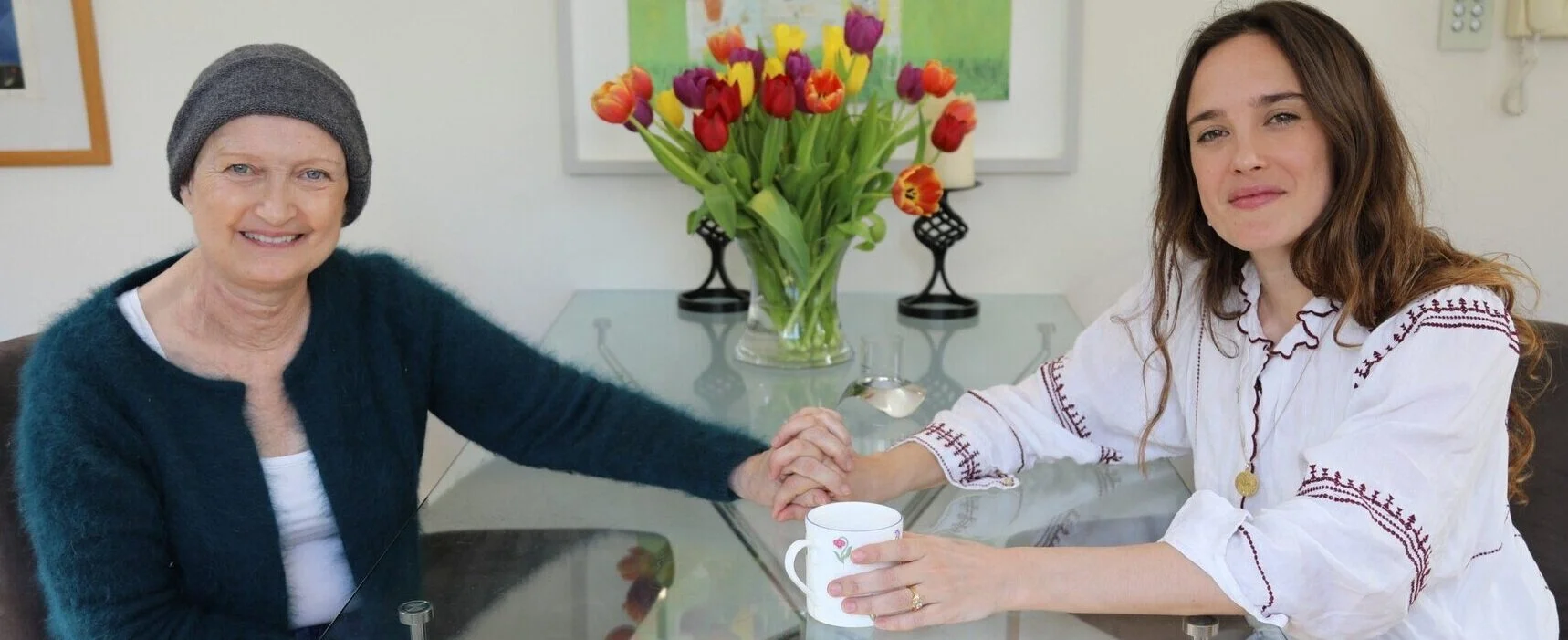
Baroness Tessa Jowell and her daughter Jess Mills. Click to find out more about Jess’ charity, the Tessa Jowell Foundation. Photo credit BBC.
“My mum's brain tumour, like the majority of new cancer diagnoses, was classed as untreatable...as a family, we were cast into a place that felt impossibly dark and completely hopeless.”
“However, we were already at the fortunate end of an awful spectrum. After 50 years in public service, as the news of Mum’s diagnosis became known to friends and colleagues, we soon found ourselves under the guidance of some of the leading minds in neuro-oncology with a number of other treatment options at the cutting edge of innovation.
We were told right away that the key to enabling better outcomes for Mum was the personalisation of her treatment and care. So, her tumour was genomically sequenced and then a highly ‘personalised’ programme was recommended that could be ‘adapted’ depending on how she was responding. Out of the darkness, we had found hope...”
— Jess Mills speaking about her mother, Baroness Tessa Jowell (1947-2018). Both were early co-founders of ACT for Cancer.
“I was spared pointless, life-limiting cancer surgery thanks to data. ”
— Marje Isabelle, ACT Chair
“I was told I had womb and ovarian cancer at 35. Overnight, I faced not only a double cancer diagnosis, but the loss of my fertility and a surgically induced early menopause.
After a full hysterectomy, further radical surgery was proposed to prevent possible spread. But it would have severely affected my mobility and long-term health, an enormous price to pay for survival.
Thanks to an extraordinary team of loved ones, clinicians and academics who re-examined my biopsies and the available research, I was able to understand my cancer more fully and avoid that life-limiting surgery.
I was fortunate to have expert advocates who challenged the accepted view, and clinicians willing to listen. But access to better options should not depend on luck. Every patient deserves the chance to understand their cancer and advocate for the best possible treatment.”
ACT for Cancer Foundation is the first charitable body to identify and work on practical ways to safely explore novel and off-label treatment options. We work with both oncologists and cancer patients, hand in hand, to find solutions together.
ACT for Cancer looked at where the barriers were which prevented both patients and clinicians to:

feel empowered
to safely change treatment paths

locate and match
potential treatments which target specific tumours

trust
Giving patients another chance, with the support clinicians need to try something new
Our solutions include:
Commissioning original, qualitative health research to assist patients, their families and their clinicians to make informed decisions when pursuing non-standard therapies;
Providing the ACT Innovative Treatment Info Hub as to go-to resource for trusted information on novel treatments and trials;
Encouraging more open discourse through symposiums and forums on novel therapeutic approaches, to combat clinicians’ reluctance to discuss any non-standard treatment options.

“Every Chance for Everyone”
Collaboration and understanding between patient and clinician is how we create better cancer treatment and care.